
KiJuBB
The Brandenburg Competence Centre for Child and Youth Participation. Mandate, services and the context for its work.
Abstract
The Brandenburg Competence Centre for Child and Youth Participation (Kompetenzzentrum Kinder- und Jugendbeteiligung Brandenburg – KiJuBB) is the state-wide specialist and service centre for strengthening the participation rights of children and young people in Brandenburg. Operated by the Paritätische Agentur für das Recht auf Teilhabe – PART gGmbH and funded by the State of Brandenburg through the Ministry of Education, Youth and Sport, its statutory specialist-centre mandate is anchored in Section 11(6) of the Brandenburg Children and Youth Act. KiJuBB advises and supports municipalities, public authorities, political bodies, child and youth welfare providers, practitioners and youth representative structures. Its work combines consultation, process guidance, training, networking, knowledge transfer and the development of professional standards. It primarily strengthens the institutions and people responsible for implementing participation and does not replace their responsibilities. This work is grounded in children’s rights and in Brandenburg’s legal and professional participation infrastructure, which has developed over several decades.
KiJuBB at a glance
KiJuBB provides permanent professional infrastructure for child and youth participation across Brandenburg. It connects children’s rights, professional practice, public administration, political decision-making, child and youth welfare and self-organised representation. The centre works throughout the state and supports the development of procedures and structures that make participation clear, accessible and accountable.
Since 2026, KiJuBB has been operated by the Paritätische Agentur für das Recht auf Teilhabe – PART gGmbH. Its work is funded by the State of Brandenburg through the Ministry of Education, Youth and Sport (Ministerium für Bildung, Jugend und Sport – MBJS). The statutory role under Section 11(6) of the Brandenburg Children and Youth Act (Brandenburgisches Kinder- und Jugendgesetz – BbgKJG) forms the core of its mandate. Projects and model activities complement this core and allow approaches to be developed in specific fields.
What KiJuBB does
KiJuBB supports young people’s representative structures and the adults and institutions that are responsible for implementing participation rights. Its principal target groups are municipalities and districts, political and administrative bodies, public and independent child and youth welfare providers, practitioners, supporting professionals, commissioners, networks and self-organised youth bodies. Services are provided across Brandenburg and, within the centre’s mandate and funding framework, free of charge.
Support starts with an assessment of the request: Which young people are affected? What decision or organisational process is involved? Who has the mandate and responsibility? What influence is possible? Which safeguards, resources, documentation and feedback routes are required? Depending on the issue, KiJuBB then provides:
- consultation, coaching and professional orientation;
- longer-term process guidance for municipalities, providers, institutions and representative structures;
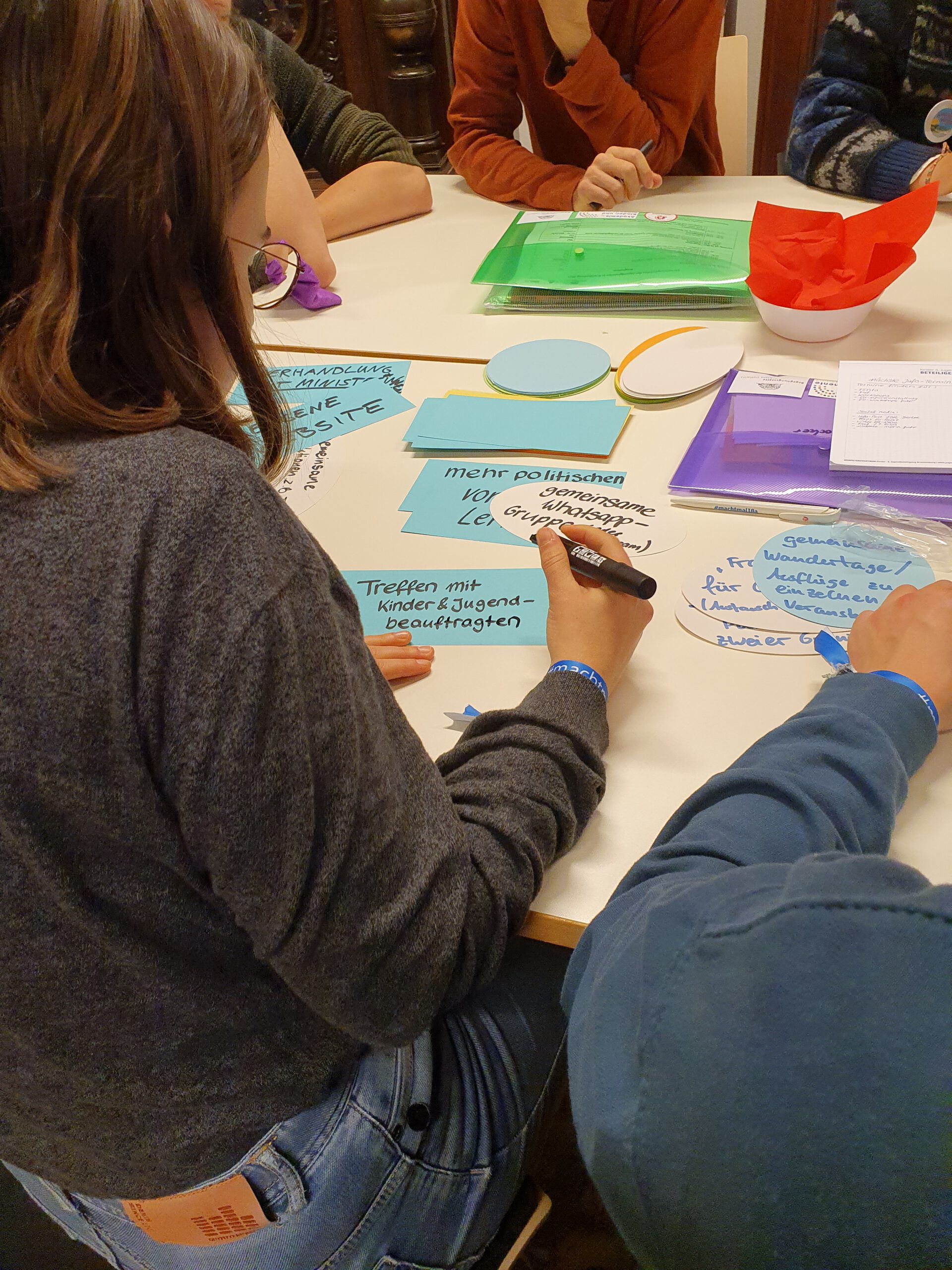
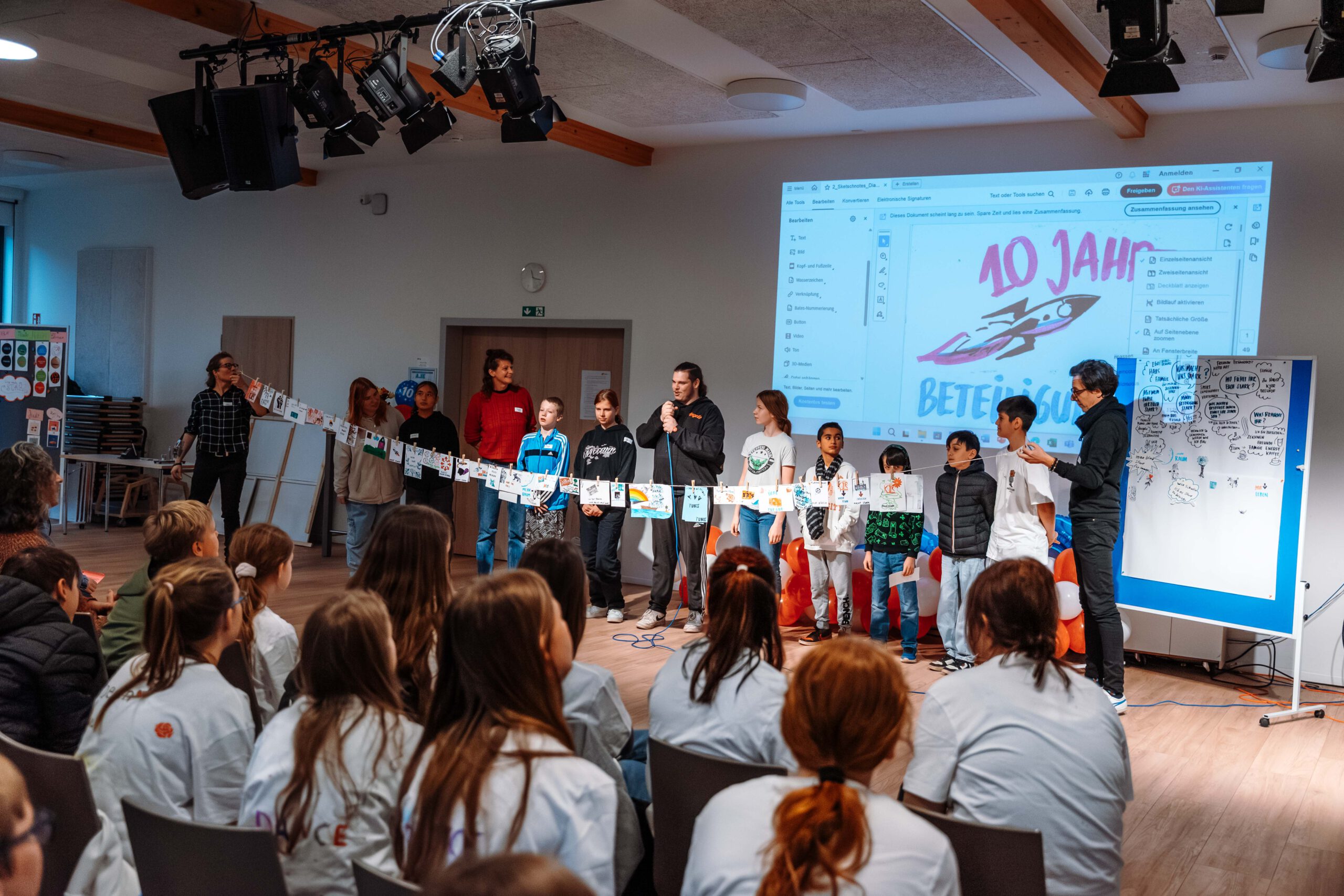
- training, workshops, peer learning and specialist events;
- networking, committee work and cooperation across professional fields;
- publications, practical tools, checklists, examples and knowledge transfer;
- the development of standards, quality processes and professional recommendations; and
- support for the self-organisation and working capacity of youth representative bodies.
KiJuBB works primarily through the structures in which participation must be embedded. It does not conduct participation on behalf of municipalities, public authorities, providers or institutions and does not assume their responsibility for decisions, feedback or documentation. It is not a general legal advice service or an operational ombuds office. Work involving young people takes place through supported representative bodies and clearly mandated projects or processes with defined responsibilities, safeguarding and feedback.


One centre, five connected areas of work
The five areas are specialist priorities within one centre. They share a rights-based understanding of participation, common service formats and standards for role clarification, accessibility, safeguarding, documentation and feedback.
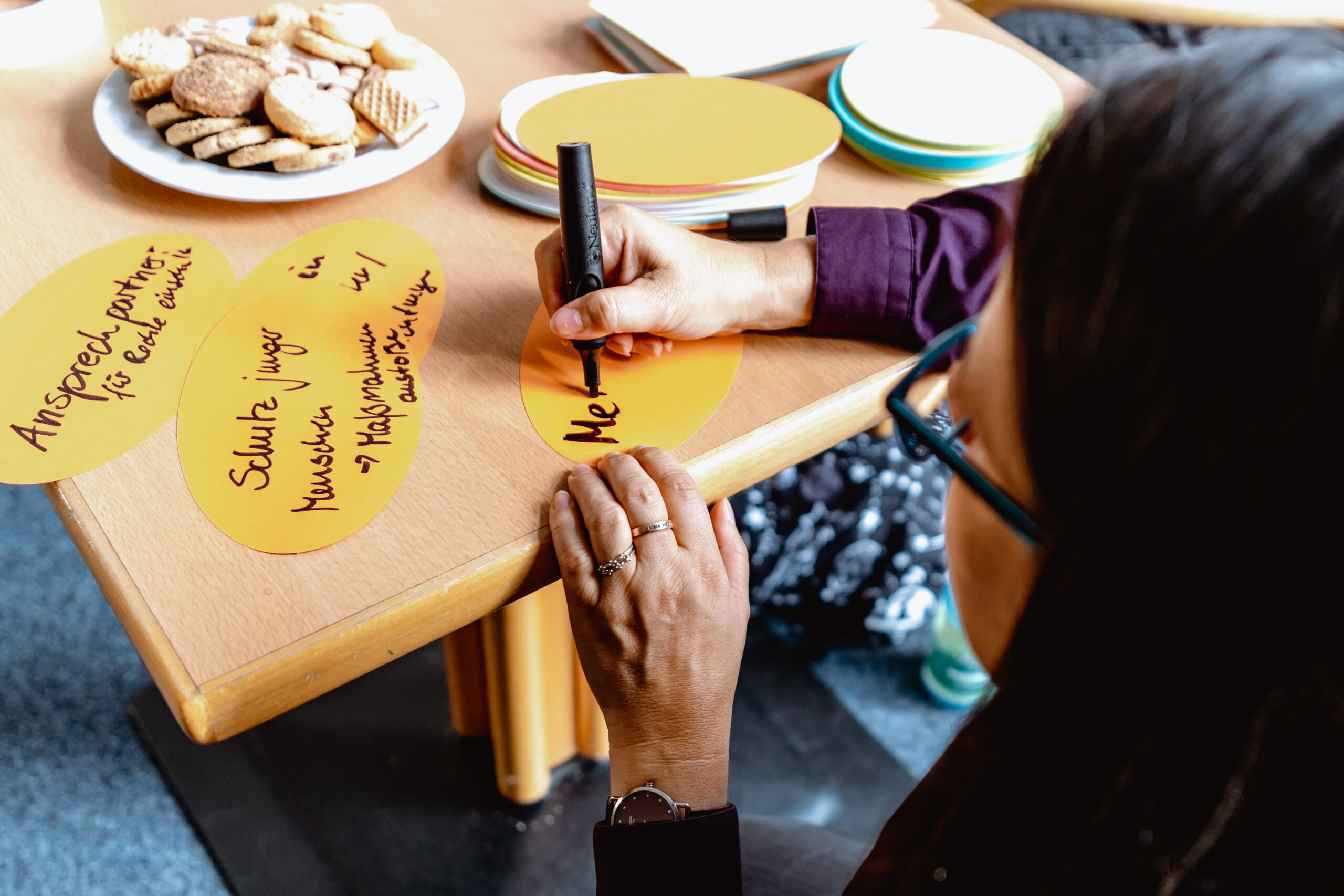
Municipal child and youth participation. KiJuBB supports municipalities, districts, political bodies, administrations and practitioners in translating participation duties into workable procedures. This includes participation strategies, main statutes, guidelines, administrative processes, role clarification, qualifications and the transfer of good practice across a predominantly rural state.
Municipal representative structures. The centre supports existing and emerging child and youth councils, commissioners and their supporting structures. Its work covers mandates, elections, rules of procedure, self-organisation, links to local decision-making and peer learning. The Academy for Child and Youth Parliaments (Akademie für Kinder- und Jugendparlamente) is delivered jointly with Stiftung Begegnungsstätte Schloss Gollwitz.
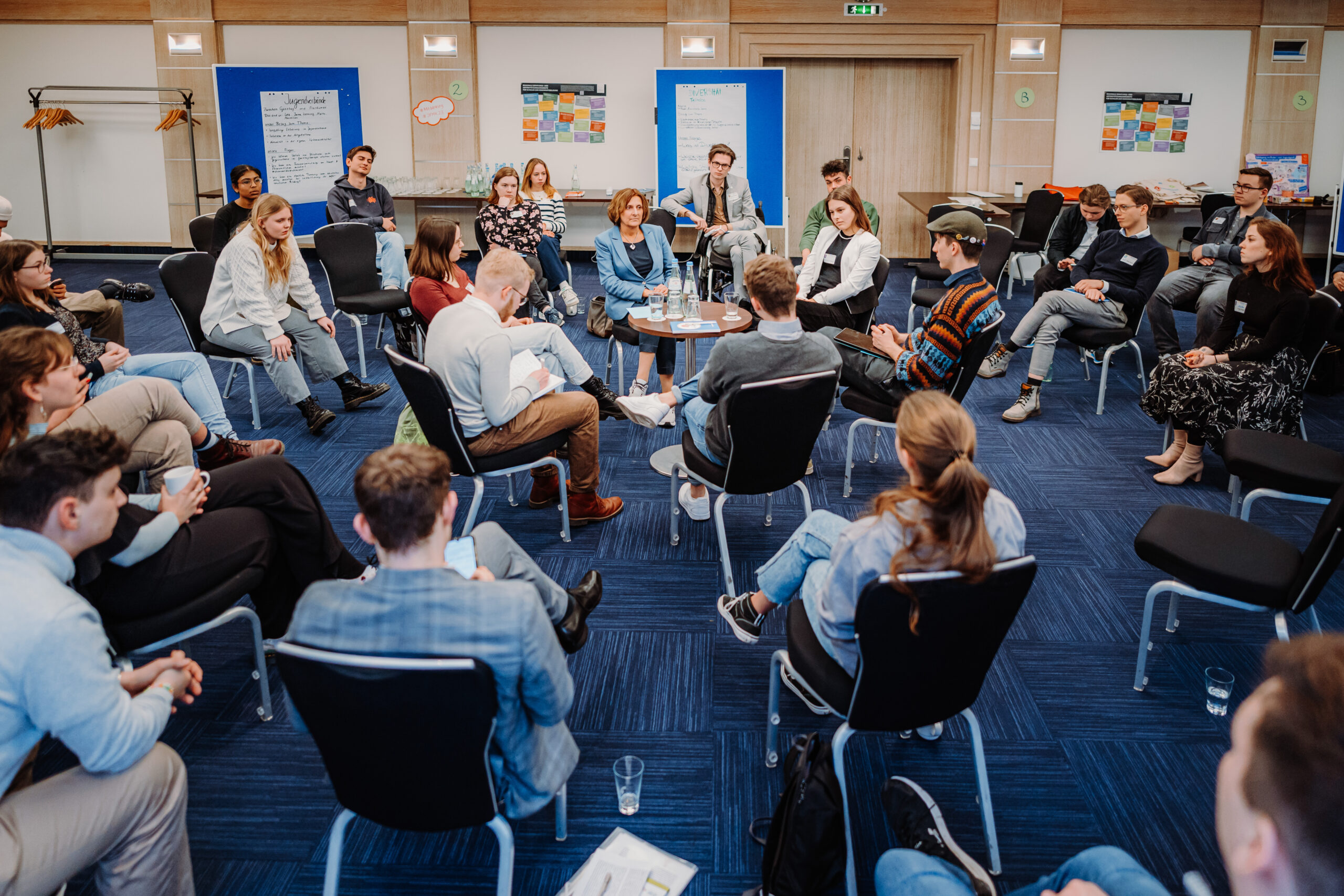
Participation in educational assistance (Hilfen zur Erziehung – HzE) and child and youth welfare. KiJuBB advises providers, institutions, managers and practitioners on participation in everyday care, understandable help planning, complaints and feedback routes, safeguarding and representative structures. State-wide dialogue forums, conducted annually in close coordination with the KJLR and supported by the Participation Working Group, connect the perspectives of young people with professional and policy development.
Participation at state level. KiJuBB provides professional advice on state-level participation processes where mandates, procedures, feedback routes and resources are clear. It helps public and political institutions establish transparent formats, accessible information, appropriate methods and links to existing youth representative structures.
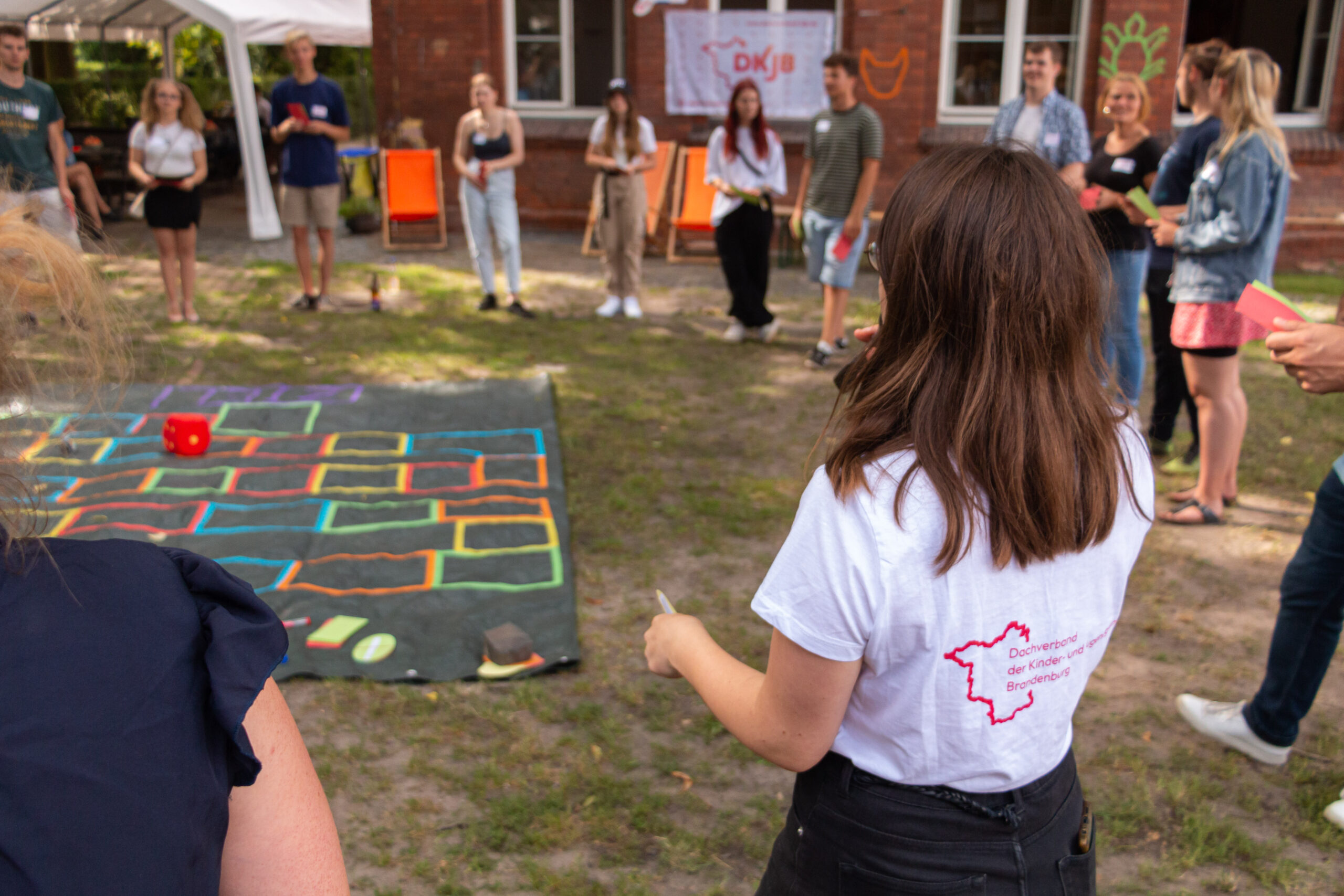
Support for youth representative bodies. The centre supports the self-organisation and working capacity of the Brandenburg umbrella association of child and youth councils (Dachverband der Kinder- und Jugendgremien Brandenburg – DKJB), the Brandenburg Children and Youth Welfare Council (Kinder- und Jugendhilfelandesrat – KJLR) and other self-organised groups. Support includes mandate clarification, training, safeguarding, communication, peer exchange and links to professional and political bodies. The bodies retain their independence and responsibility for their own positions.
Current projects and development areas
Three projects currently complement the statutory specialist-centre role. They address participation in specific policy fields and create opportunities to test and transfer approaches:
- The Youth Forum for Sustainability Brandenburg (Jugendforum Nachhaltigkeit Brandenburg – JuFoNa) develops participation and networking around sustainability policy at state level.
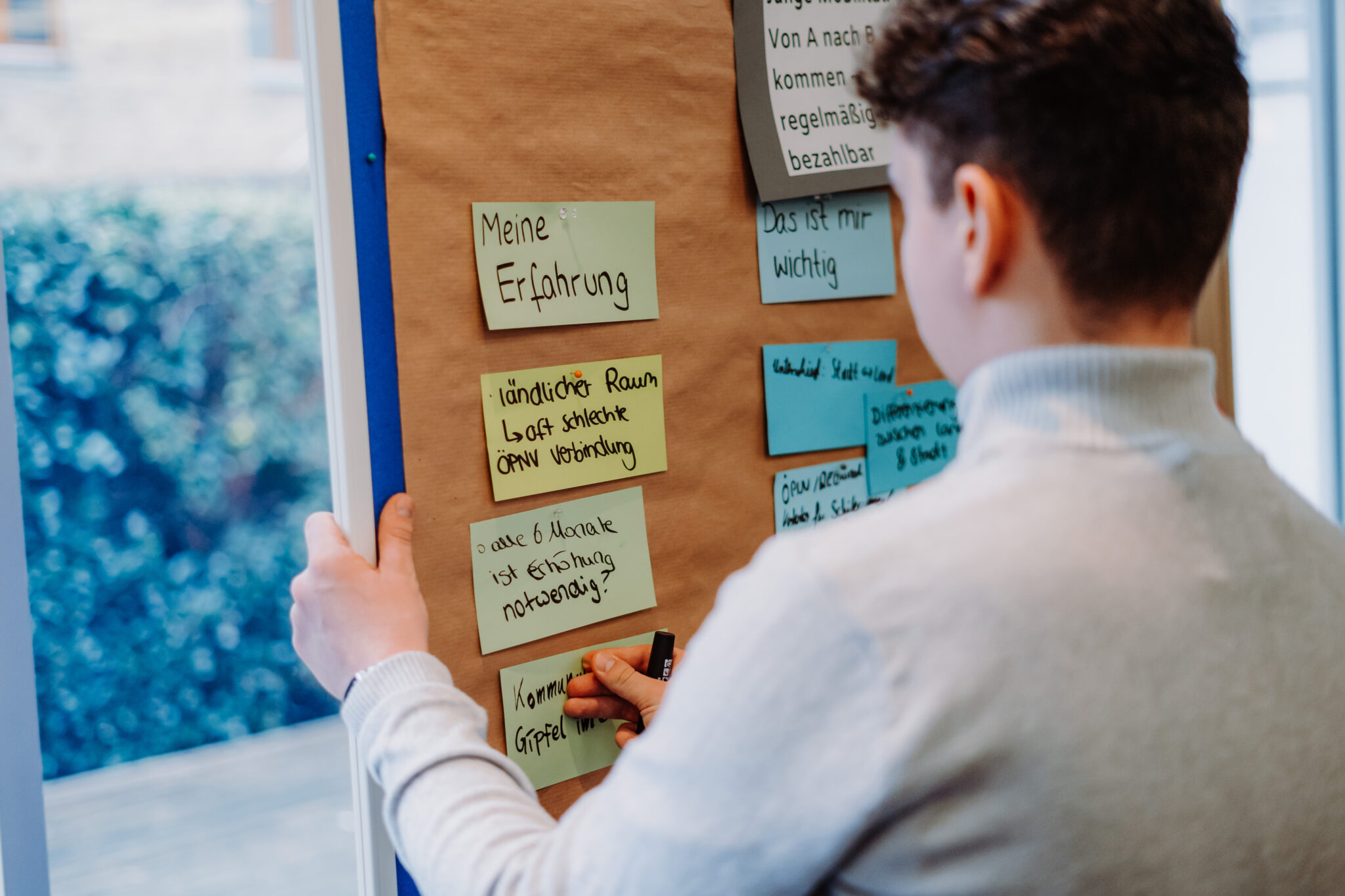
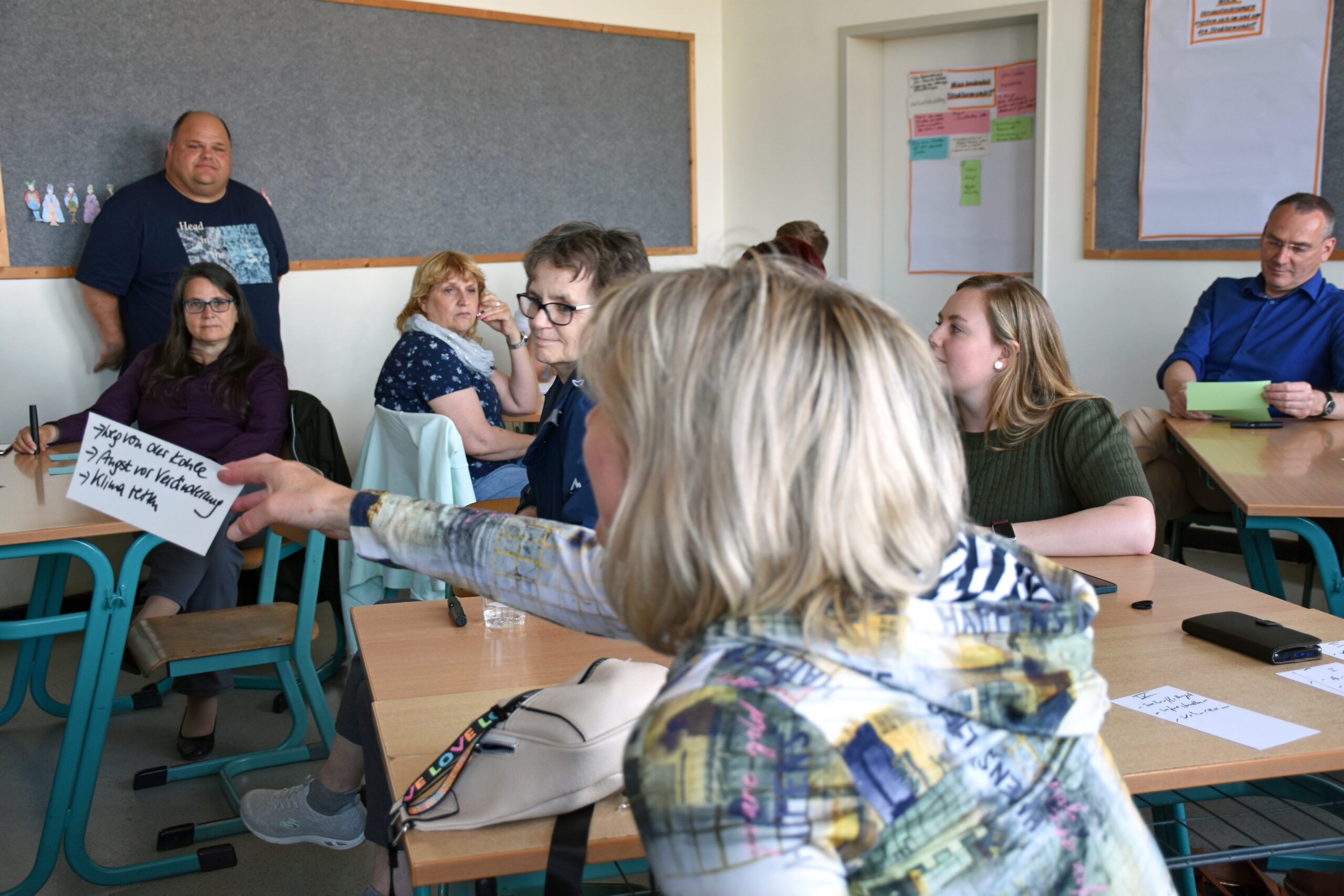
- Child and youth participation in structural transformation in Lusatia (Kinder- und Jugendbeteiligung im Strukturwandel) connects regional change with the perspectives and interests of young people and is supported from KiJuBB’s office in Senftenberg.
- The model project on inclusive child and youth participation in Cottbus develops accessible approaches with local partners and young people.
The projects do not replace the centre’s core mandate. Their experience can inform consultation, training, materials and professional standards across Brandenburg.
The professional basis: participation as a right and a process
KiJuBB understands participation as a right of children and young people and as a responsibility of the institution making the decision. Article 12 of the UN Convention on the Rights of the Child requires children to be able to express their views in matters affecting them and for those views to be given due weight. This applies to individual decisions, public services, municipal planning, child and youth welfare, organisations and political processes.
For KiJuBB, meaningful participation is not defined by one method. A youth council, a municipal workshop, a digital consultation, a help-planning meeting and a self-organised representative body serve different purposes. Quality depends on the relationship between participation and the actual decision. In practice, this requires:
- a clear subject, decision-making scope, mandate and allocation of responsibility;
- early, understandable and accessible information;
- formats that reflect age, development, interests and access needs;
- safe opportunities to contribute without discrimination or undue exposure;
- due consideration of young people’s contributions and a reasoned response; and
- documentation and understandable feedback on the process and outcome.
The legal framework for KiJuBB’s work
Several levels of law shape KiJuBB’s work. The UN Convention on the Rights of the Child provides the international children’s rights framework. German Social Code Book VIII – Child and Youth Welfare (Sozialgesetzbuch Achtes Buch – SGB VIII) requires participation in decisions affecting children and young people, recognises self-organised representation and provides for independent ombuds services. Participation is also part of help planning and the requirements placed on licensed facilities.
The BbgKJG, in force since 1 August 2024, strengthens the state framework. Section 4 describes participation as a traceable procedure involving understandable information, identification of those affected, opportunities to express views, due consideration, a reasoned response, an opportunity to reply and documentation. Sections 11 to 13 address age- and development-appropriate participation, early agreement on formats, omitted participation and complaints. Section 11(6) establishes the specialist centre that forms the core of KiJuBB’s mandate. Sections 137 onwards provide a framework for self-organised bodies, while Section 140(3) addresses support for the KJLR.
For municipal matters, Section 19 of the Brandenburg Municipal Constitution (Kommunalverfassung des Landes Brandenburg – BbgKVerf) requires municipalities to secure participation and involvement rights for children and young people in all matters affecting them. Municipalities remain responsible for organising and documenting participation. KiJuBB connects this municipal duty with practical procedures and professional standards without taking over the municipality’s role.
How the context and KiJuBB have developed
Brandenburg’s participation infrastructure has developed since the 1990s through municipal initiatives, youth organisations, child and youth welfare providers and specialist networks. KiJuBB’s own roots go back to 2002, when participation models were developed in the district of Potsdam-Mittelmark. Over time, the work expanded from municipal child and youth participation to participation in educational assistance, municipal representative structures, state-level participation and support for self-organised bodies.
Legal development changed the setting for this work. In 2018, the former Section 18a of the BbgKVerf made municipal participation rights binding. The revised Constitution of 2024 continues this duty in Section 19. In the same year, the new BbgKJG brought together state requirements and placed the specialist centre on a statutory footing. Since 2026, KiJuBB has operated under PART gGmbH. This history explains the centre’s present role: it brings experience from different fields into one state-wide professional infrastructure while responding to a more explicit rights and duties framework.
Further information
KiJuBB offers a point of contact for professional orientation, consultation, process guidance, training, networking and materials on child and youth participation in Brandenburg. Requests are clarified according to mandate, responsibilities, intended influence, safeguarding, resources and feedback.